Saturday, June 12, 2010

Gidday. I thought that it was time for me (Ted) to write on here and give an update of some things that I've been doing at work, so here goes.

Volcano Study: The first month I was here (March), I was in the middle of the North Island at Mt Tongariro and Mt Ngaurahoe (better know as Mt Doom from the Lord of the Rings). We flew around these volcanoes for about a month making measurements of the Earth's resistivity at ~100 locations. Meg helped out for a weekend and got a few heli rides too. The weather was great and the views amazing. Perhaps the highlight was getting flown up to, and dropped off on the summit of Mt Ngaurahoe. We made a measurement just outside of the crater, very cool! By the way, this is an active volcano, but there isn't any lava in the crater, it's all just rock at the moment. Once the pressure below builds up enough, magma in the subsurface will then erupt, and you'll hear about it on the news! Related to that... the measurements that we made will help to image the magma below the volcano. This information is quite useful to those who monitor this natural hazard.


Geothermal Work: After the volcano fieldwork, I was in Taupo (NE of the volcanoes) for about 2 weeks making measurements with the same equipment, but this time working on a geothermal energy project. New Zealand currently gets ~15% of the countries power production from geothermal energy. Basically, below the North Island of New Zealand, one tectonic plate (Pacific) is sliding beneath another one (Australian). This process generates a lot of heat, and fluids. The end result near Taupo, is that water 2-3 km below the ground is at ~350 degrees. So, energy companies drill to this depth, extract the water, at the surface it flashes to steam and they use it to drive turbines to generate electricity. The steam is then condensed and nowadays is starting to be sent back into the earth to complete the cycle. So this method of power generation has a minimal impact on the environment. Good!

Now, what am I doing? Well, the government wants to increase geothermal energy production and move away from nastier sources of energy. This will require companies to drill deeper (~4-5km) where fluid temperatures are hotter. So, to nudge companies to explore deeper (which costs more money) a project has been funded to image the deeper structures of the geothermal systems. This is what I'm working on at the moment.

What else... I'm heading to Taiwan next week for a conference and looking forward to that. I haven't been back to Taiwan since I was there collecting data for my PhD, so it will be fun to return and hang out with Chih-Wen, the student I was with while collecting my PhD data.

Other than that, Meg and I are anxiously awaiting getting to move into our new home on July 2! Less than 3 weeks away now...

To finish off, as Meg's been doing I'll explain a Kiwi phrase.
Phrase: Rattle your dags.
Translation: 'hurry up' or 'get a move on'.
Explanation: 'dags' are sheep poops that defied gravity by clinging to the sheeps bum wool. Over time, these harden up and become a permanent fixture. Then the farmer comes along to sheppard his flock, the sheep run and subsequently their dags 'rattle' to and fro.

Take care
Meg and Ted

Monday, June 7, 2010

More from the New Zealand Dictionary

Well, we now have 3 weeks and 3 days until we get our new house, not that we are keeping track. I realized that by the time we get our place, and finally unpack all the stuff we shipped, I will have gone 5 months living out of only two bags. Until a few weeks ago I really hadn't missed anything too much; I mean I wanted my bike and a few other things but otherwise was surviving. However, I think 4 months must have been the threshold because now I miss everything, my warm clothes (because it is getting kind of cold here), our familiar furniture, our books and other things to do. I am definitely tired of being in transit and looking forward to finally settling in; to be able to set up a routine and start exploring our new neighborhood will be great.

We are now living in a one bedroom, furnished apartment on The Terrace. It is actually closer to my work than I was before and still a good location for Ted heading onto the highway. It is nice to have our own space and it is still very handy to the city so we can continue to explore the area.

As it is winter here the weather has gotten kind of gloomy. So far it hasn't really been too cold, day time highs around 13C, but it does rain a lot. Luckily most of the city streets are partially covered so even in a hard rain you don't get wet, meaning we aren't totally trapped inside.

I have heard a few more New Zealand words and phrases I thought were interesting....

Sussed - Similar to "sorted", it means organized, or figured out, but is not used as often as sorted. I often hear it used in questions like "have you sussed out our travel plans?". I think I may have even heard someone say they were going to "suss" it out, as in figure it out. I definitely prefer sorted myself.

Done and Dusted - This saying is not said by everyone but those who like it, like it a lot. This is used as a further emphasis to "done" and often in the context of completing a large transaction or piece of work. For instance, our real estate agent likes to use this saying to refer to the process of buying a house and completing a purchase (or in his mind a sale). I find that people who like this one tend to use it quite frequently.

Taa - Not sure how to spell this one, but as it sounds like baa but with a T, I thought T-a-a would work. This is used as an informal shortcut for the word "thanks". Like when someone holds a door for you, you say "taa". I guess 2 syllables was 1 too many.

Well I guess that is all for now. We hope everyone is doing well.

Meg and Ted

Thursday, May 13, 2010

The New House

Well, we finally bought ourselves a place to live. Whew, I didn't realize how hard buying a house was going to be, especially without Ted around much during the first few months, and in a new country.

I had a pretty good system worked out. Wednesday I picked up the local property sales magazines, then I read them and identified all the places I wanted to view. I usually called to get a few viewings set up for Friday afternoon, however, the majority were left for Sunday, open house day. Saturday or Sunday morning I would write out the times and locations of all the places and organize my day, I know DORK! I was able to see up to 11 places between 11 am and 3 pm though which is pretty impressive if I do say so myself. I would grab some water, maybe a snack, a map and head out. I think I saw over 60 houses, maybe even more.

There is definitely a variety of house styles here in Wellington. There are the old Victorian age homes, which usually needed lots of maintenance work, rewiring and redecorating, weren't insulated, had single pane glass, no parking, no closet space and no garage. However, they did have some nice features like old wood floors and artistic glass. The newer houses were a little more North American looking but still weren't insulated and had single pane glass as well. There was also an issue in the 80's where they built "leaky" homes which weren't weather tight and often had moisture and mold problems. The layout of houses was a bit different from North America as well. Most houses are built on fairly steep slops and so generally have a main floor and a smaller downstairs portion as well. The kitchen and main living space are upstairs and they often spread the bedrooms out over the two floors.

Then there is the Kiwi DIY attitude, they really like to renovate things themselves and don't always get it inspected. To add more complexity to an already complex problem there is the issue of views, wind and sun. If you have a view you likely have really high winds. Depending on which part of the hill you are on you may get morning sun, afternoon sun, both or none. Due to the fact that they don't insulate anything (oh yeah, and no central heating either) having afternoon sun can be quite important for the winter months to heat the place up. All this made it difficult to find something we liked. However, after ~2 months of looking we finally found something we liked. It is on 1 Nebraska Way and is a newer house without any leaky building problems (well, almost no problems) and it has insulation, a garage, closet space, and a view of the bay.

Now we come to the Tender process. The house buying process in Canada I believe goes like this, home owners advertise their house with a price they would like, then you find one you like and make an offer right away at a price lower than the asking price, then you negotiate back and forth a bit until you agree on a final price. In New Zealand some houses are sold through a Tender process. The owner puts the house on the market, without any indication of price, then any interested buyers have to put their offer in at the specified date and time, and not before. The vendor reviews all offers at once and can either accept one, or accept none and negotiate with someone to increase their price or change their terms. This means that you have to guess at the price and put in the best offer you can, with as few conditions, like financing and building inspections, as possible and wait until the specified Tender date. It is completely in favor of the vendor and painful for the buyer.

So, the house we saw was being sold by Tender, the tenders had to be submitted 2.5 weeks after we saw it. The 2.5 weeks meant we had time to get our finances in order and figure out what else we needed to do but it also meant waiting until the end of April. We put the offer in at 9 am on the Tender date and at 7 pm the agent called to say they had accepted our offer. I was stunned, I figured since it took so long that we hadn't gotten it.

Our offer was subject to a builders report, so after they accepted the offer we had to get the building inspection done as soon as possible. We figured it would be fine since the house looked like it was in great condition and well maintained. We were wrong. The report came back stating that there were moisture issues in the downstairs master bedroom. So, we panicked, we really liked the house and didn't want anything to be wrong with it. Once we calmed down we found a second builder to come and check out the area identified and give us a quote for fixing it. The current home owner came as well. The builder explained the issues and the home owner ended up offering to have it fixed before we moved. So, with that everything was solved and we had purchased our first house. Yeah!!!!!!!! We get to move in on July 2nd, which seems like a long way away. The following photos are from the property sales website.

This is the view of the house from the street. It has a main upstairs floor, with kitchen, living/dining room, 2 bedrooms, and then the master bedroom downstairs, on the same level as the garage.


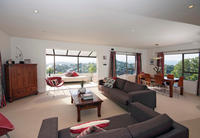
This is the view from the main living area. We look down towards the city and Wellington Harbour.


Here is our living and dining room area, there is a conservatory as well, so you can enjoy the view but not the wind. This end of the house will get full morning sun.


The dining room and kitchen.


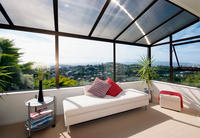
The conservatory, we are looking forward to sitting out here with some good wine.


Here is the master bedroom, we even have an ensuite, score or should I say Sweet As.


The kitchen.


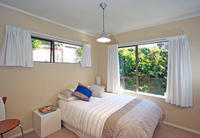
Here is the guest room, can't you just imagine yourselves staying here???


Here is the deck, off the main living area.


Here is the music room, now Ted can play his guitar really LOUD.


Those are the main areas, there are more photos on the internet, just go to the following link, http://www.nz.open2view.com/Property/222826.

Now we just have to wait 7 weeks and then we can finally settle in.

We hope you are all doing well.

Meg and Ted

Sunday, May 2, 2010

The New Car


Well, Ted is now finally back from his field work with no plan to leave for a while. It has been good to get to explore our new city together.

The first weekend he was back we ended up buying a car. We bought a 2005 Honda Accord Euro, the same color as our old Civic. The Accord Euro is actually quite similar to a civic, the back looks like a civic and the front looks like an accord. The engine is larger than our civic as well. Ted was really excited about the rims, they do look cool but I am not sure I understand the excitement.

We took the photo of the car from the peninsula across the bay from downtown Wellington. The downtown portion of the city is fairly compact. It is split up into two main parts, the business district, where my office is, and the social district with the bars and cafes. You can walk across the main business district in less than 20 minutes and the main social district in 20 minutes more. From there the suburbs spread out in all directions.

With the car we can continue to explore Wellington and the surrounding area. We found a cool beach the other day, down a long narrow road. Most of the roads here are quite narrow, some not even wide enough for two cars to pass, making it kind of nerve raking to drive, especially in our own car.

Sorry for taking so long to post again, keep checking back and I will try to update you more often.

Wednesday, March 24, 2010

New Zealand Dictionary

Hello, now that I have been here for several weeks I think it is about time to explain some of the popular kiwi words and phrases. The kiwi accent sounds very similar to the Australian accent with a few small differences, it sounds a bit more British. Although I can generally understand what they are trying to say there are a some interesting words and phrases that you don't hear in Canada.

1. sorted - this is kind of the same as organized
I have got your travel plans all sorted.

2. sweet as - this one is kind of the same as cool or great or just some emphasis on sweet, it sounds like they are saying sweet ass though, which when my boss says it just doesn't seem right. It is usually used at the end of a sentence.
Boss: Can you write this giant document without knowing anything about it
Meg: Sure
Boss: Sweet as

The story behind this is that in my first week of work my boss was complaining about having to write this Environment Plan for our offshore facility. So, I offered to help, when will I learn. I figured it couldn't be that hard, it was only supposed to be an addition to an existing document and I just needed to gather some information from other people and put it together, no big deal right. Wrong, it turned out to be bigger than either of us realized and I really had no idea what I was writing about. It turned out ok in the end but made for a stressful first two weeks.

3. capsicum - believe it or not it is a pepper, so a green pepper is a green capsicum

4. pumpkin - any form of squash, butternut squash = pumpkin, acorn squash = pumpkin, spaghetti squash = pumpkin, you get the idea

5. heaps - can be substituted for lots
There were heaps of cars on the highway today, or, this house will get heaps of sun in the summer.

I have to say so far heaps is definitely my favorite.

Tuesday, March 23, 2010

Pictures from Offshore


The top photo shows my room from the doorway. The next one shows the room from the far wall. The middle photo shows the office we use while offshore, complete with computer connection and phone. The next photo shows the beds and the last shows my bathroom. All of these are from the FPSO.

Wednesday, March 17, 2010

Meg's Offshore Adventures


The world has finally stopped moving, thank goodness. After spending 6 days, 120 km off the coast of New Zealand it took 2 full days for solid ground to feel solid again.

As you may know, my new job involves offshore crude production. OMV owns a Well Head Platform (WHP), and manages a Floating Production, Storage and Offtake facility (FPSO) [every good engineering blog needs a few acronyms]. The WHP has 7 crude oil wells that have been drilled into the ocean floor. From there the crude is sent to the FPSO, which is an old oil tanker that has been converted into a processing facility, that separates the crude oil from the water and gas that come up from the well with the crude. The hull of the tanker is the original hull and the production facility was built on the ships deck. The tanker has been moored to it's current location by a buoy that is held in the ships hull and is attached to the ocean floor. This buoy is not fixed in the ships hull so the ship can spin around it and ideally settle facing the swells, at least most of the time.

The photo shows both the FPSO with the WHP and drilling rig behind in the distance. The grey portion is the drilling rig and it was removed once drilling was completed, only the yellow part remains. The picture below shows another photo of the FPSO.

So, I arrived offshore on the FPSO, after flying for more then 30 minutes over the ocean in a helicopter. I am currently the only female of the 42 people on board and I get my own room, which is great. The room itself is a pretty good size, for being on a boat. There is a bunk bed, couch, cupboard, big TV (I think it is actually a 48" flat screen, we don't even have a tv that nice at home), a window that looks out over the ocean (very small but still there), and an en-suite bathroom with shower.

Life on board the ship is really not too bad. We get up just before 6 so we can have breakfast and be at the morning meeting by 6:30. Then we work, and there is a snack at 9, lunch at 12, a snack at 3, dinner at 6, and a snack at 9; and no dishes to do, plus the food is actually really good. Most of the guys here work shift work, there is both a day and a night crew who each work 12 hours (6:30 to 6:30). Once they are done there is a large lounge room with big TVs (bigger than the one in my room) and gaming systems. There is also a decent gym on the bottom floor as well as every room has an internet connection and a phone. If you have laundry you put it outside your room at night and it is at your door in the morning, clean and ready to go. This all sounds great except that is all you get for three weeks if you are a shift worker out here and there is really no where else to go except the cafeteria, lounge, gym or your room.

The first day I arrived the waves decided to go one way with the wind in another direction, making the boat sway in a very unpleasant way. I did manage to keep down all of my food but spent most of the day thinking about letting it out. That night the swells got worse. My bed is parallel to the length of the boat and the swell was causing us to rock sideways rather than for and aft (marine jargon for forward and backward) which meant that all night I rocked back and forth in my bed, enough so that I had to brace myself to keep from sliding back and forth. Needless to say, I didn't sleep much.

I spent four nights on the boat and then headed to the WHP. The WHP was very different from the boat. When I first arrived on the ship I think I felt like it was pretty cramped and close and not much freedom, that was nothing compared to the WHP. The original plan was that the WHP would not normally have people on it, the operation would be run from the boat and only the occasional maintenance person would be there. They are currently at maximum capacity. There are 30 beds and normally have 30 people, when I was there the head count was 29. I had to share a room with the guy who was in charge of all the work going on, I didn't see him at all though so it really didn't matter.

The rooms there still have an en-suite bathroom but you have to share it. The cafeteria doesn't have enough seats for everyone so we had to eat in shifts. The only phones are communal and in the middle of the lounge area (the lounge area consists of a couch beside the cafeteria). Once outside the accommodation the total area is maybe 75 ft by 75 ft, at most. I cannot imagine spending three weeks at a time out there.

When you walk down to bottom deck, you are standing on metal grating that you can see through, and there is nothing below you but ocean, ~ 60ft down, crazy. I liked just standing there and looking down, it was pretty impressive. We had some pretty good wind while I was there so I spent a bit of time just watching the waves crashing against the structure. Those same waves were making the whole platform move, not in a regular back and forth motion, more of a circular motion but inconsistent.

After spending 24 hours on the WHP I headed back to the FPSO for one more night before heading home. As I mentioned at the beginning, once I got home it took almost 2 full days before I felt normal on solid ground.

I had some difficulty putting photos in with the post so I decided to stick them in a separate post. Anyone with tips on adding pictures to the post let me know.

I hope everyone is doing well. Keep watching for some pictures from Ted's helicopter field work on Mt Doom.